
Talk to a PlusLife Expert
Not sure which sauna fits best? Speak with our team to get clarity and confidence before you buy.
One of you picks the spot. One of you reads the spec sheet. And before any deposit, one of you was going to post the lot to a forum. This is that post, answered first.
Free expert consultation. No deposit taken on it.

Any seller who will not put those in writing has answered you. Skip to the call.
Most couples come to a home sauna after years of sharing the gym one. There is a number in mind at the start; a few weeks of reading later the number is higher and the trust is lower, because you have learned what the cheap kits leave out.
Buy cheap, buy twice, unless you know what you are checking.
It is why the last thing most couples do before paying is post the full spec sheet to a sauna forum with one line at the end: "maybe I am forgetting something." Here are the seven things those strangers will ask about, each with a checkable answer, ours included.
Published by PlusLife Health, an Australian sauna and ice bath brand. Bring the same seven questions to any seller.
The listGetting a sparky out and back with a number takes a week or two, and it cannot start without the model's electrical requirement. That is the piece worth having first.
I needed an electrician.Gary, a PlusLife owner, on what he wished he had known. Customer survey, 2025.
A traditional sauna is hard-wired to a dedicated circuit by a licensed electrician, not run off a standard power point, and the connection is house-specific: the run to your switchboard, single or three phase, the headroom your board has left.
Electrical costs are not on the website because they vary by property. If a figure is needed the electrician is about $1,500. The buyers who get this right put money aside for the electrician before they choose a brand.
We also have a network of sauna-trained electricians we can recommend, and your own sparky can speak directly to our team.
One of you books the sparky to look at the switchboard and the run to the spot; the other gets the model's electrical requirement in writing so the sparky can quote something real. Both before the deposit.
The electrical connection named as its own line, requirement in writing for your sparky.
The forum version of this regret is the truck arriving before anyone measured the side path. A sauna needs a level, weight-bearing surface, and access, base, distance and whether a crane is needed all move the delivery and assembly number.
Our in-house assembly team installs saunas nationwide, and assembly is quoted alongside delivery, so the weekend stays yours. Owners tell us the delivery itself is the easy part when the site is decided first.
Walk the route, measure the gate, decide the base together. Then take three things to the call: postcode and access, site and base, and the model.
Delivery and assembly quoted before deposit from those three inputs, with a photo of the space answering placement on the same call. Base, footprint and deck loading come in writing, per model.
An almost identical sauna, but with an 8kW heater instead of a 6kW, and with free install for the same price... I am wondering what the catch is.A Brisbane buyer comparing two listings, on the sauna forums.
That is the right suspicion, and the way through it starts with a name. Two listings can look identical while the heaters inside are a size apart, and the photos will never show which is which.
So the question is really two: who makes the heater, and how it was sized. A heater small for the room heats fine in February and struggles at the bench in July.
Experienced buyers treat the unnamed heater as the import-grade sign, and it is a fair read.
The technical question: brand, model number, kilowatt rating, in writing. The real one: will it be hot enough in July, at the bench. Put both in the note.
Ask any seller for brand, model number, kilowatt rating, and how it was sized to your cabin. Four facts, one email.
Ours has a name. We partner with Harvia, the biggest sauna heater manufacturer in the world. Harvia is a publicly listed company, with options based on your usage and sauna size. All four go in writing for your model before you pay anything, and sizing is answered on the call.
Decide on feel, not on price.
My wife likes the infrared, I like the traditional.An Australian owner, on the sauna forums.
Couples rarely stall on price. They stall here. Two questions hide inside the one argument.
The first is how hot you each actually want it: steam over the stones, or a gentler, drier warmth. We took the money out of the argument: the Mini Traditional 2.0 (from $11,990) and the Mini Infrared Full Spectrum ($12,116) sit little more than a hundred dollars apart.
The second question is quieter and often the real one: I want it ready when we get home. Every traditional sauna can be optioned with the Wi-Fi controller, at a premium, or comes with built-in controls, depending on the heater you pick, with prices on the website. Harvia is behind the app.
Schedule it from your phone before you leave: the app learns your cabin's heat-up time and notifies you when the room is ready. Convenience and heat were never opposite sides of the argument.


Answer "how hot, honestly" first, together. Then check whether "ready when we walk in" was the real ask all along.
The Mini in both formats, no side taken. Feel both on a showroom visit, by appointment.
Four down, three to go. The sparky, the base and the format are yours. The heater, the walls and the warranty are ours to put in writing, on one short call.
Get the three in writing: free expert consultationAsk any listing two things: how thick are the walls, in millimetres, and which factory builds it, in which country.
The wall figure is the one you cannot see in a photo, and it is the first thing cut to hit a low sticker price. Forum owners describe kits that struggled to hold winter temperature and moved once the weather got into the boards. Buy wrong and you pay for the sauna and the electrician twice.
Buyers on the forums suspect that different logos often share one factory, and it is a reasonable worry. A seller who will not put a number and a place in writing has answered.
The millimetres and the country go in the note, beside the question they stand for: will this still hold up in year three, in our weather.
42mm walls, and the why: thicker walls mean better insulation and faster heat-up. Bring a tape measure to a showroom, by appointment.
On origin: our traditional saunas are designed in Australia and 100% built in Europe, where sauna was born. A certificate of origin is available on request. Timbers are Thermo-Aspen and Thermo-Pine, chosen for harsh Australian climates.
The "is it actually good" question belongs to owners rather than the brochure. Five out of five owners we spoke to said the same thing.
Every question so far is about whether the sauna is any good. This one decides whether it gets used. Most couples plan the space for two and quietly hope for the odd guest, and it is the yard, not the spec sheet, that decides how that goes.
A bench long enough for two to lie flat, and a margin for the friend who stays late. Benches in Aspen or Alder, knotless and smooth so you do not get burnt. Bench heights are set for proper loyly, so the whole cabin is heated.
Then go and look at the spot from the kitchen window at dusk. That is the view you will stand in front of every night, deciding whether to walk out to it. A warm room you can see from the sink gets used; one you have to go looking for gets skipped.
Clearance to the house or fence, and the footprint per model, come in writing.
Face the glass at the garden, not the neighbours.
Then the look. Two forms in the traditional range:

Agree the spot and the form standing in the yard, not at the laptop, and check the base and electrical run against it: one plan, not two.
Showrooms are open by appointment: stand in one before you decide. Ask on the call whether there is a host within reach of you.
Competition with other brands but ultimately, your customer service was the best and I really appreciated that.A married PlusLife owner, on why he chose PlusLife over his shortlist. Customer survey, 2025.
One warranty number covering everything a company sells usually means nobody looked closely. Ask for the term per model, in years, in writing, and notice how long the answer takes to arrive.
Then ask the second question out loud: three years from now, when something needs a part, who picks up? That is not rude. It is the question.
Here is ours, said plainly: Max Traditional 2.0 is five years residential, extendable to ten. Every model's term goes in writing before any deposit.
And who answers: PlusLife is family-run since 2021, husband and wife founders named on our About page. We still use our own saunas at home. Not a promise; things you can check.
The version worth more than ours is an owner's: the reviews that end with mates being sent our way are the endorsement that costs the writer something.
So judge us on what can be checked: a showroom, by appointment; photographs of real Australian installs; the warranty terms, taken to your electrician and your forum. If we do not make the shortlist after that, we did not earn it.
Warranty per model goes in the note beside the heater name and the wall figure. The "who answers" question gets asked out loud, of everyone on your shortlist.
Warranty per model in writing before you commit. The rest is checkable, not promised.
The page condensed into the note you were going to write anyway, our column filled in. Screenshot it and ask every seller the same seven.
| The question | What to ask for | PlusLife's answer |
|---|---|---|
| 1. Electrical | The model's electrical requirement in writing | Named as a separate, house-specific line, requirement in writing, plus a network of sauna-trained electricians to recommend |
| 2. Delivery and base | Delivery and assembly quoted for your actual address | Quoted before deposit from postcode and access, site and base, and the model |
| 3. Heater | Brand, model number, kilowatt rating, sizing | Harvia, the biggest sauna heater manufacturer in the world; model and kilowatt rating in writing for your cabin |
| 4. Format | A comparison that takes no side | Mini Traditional 2.0 from $11,990 and Mini Infrared Full Spectrum at $12,116, little more than a hundred dollars apart |
| 5. Walls and origin | Wall thickness in millimetres, plus where it is built | 42mm walls for better insulation and faster heat-up; designed in Australia, 100% built in Europe, certificate of origin on request |
| 6. Placement | Footprint per model, and a way to see one first | Showrooms are open by appointment; ask on the call whether there is a host within reach of you |
| 7. Warranty | Warranty per model in years, in writing | Five years residential on the Max Traditional 2.0, extendable to ten; every model's term in writing |
Column three, for your address. A short call, free, and you leave with your own version of the right-hand column, in writing.
Fill in your columnNone of the seven is the reason you want a sauna. They are the reason it still gets used in year three, instead of standing idle at the bottom of the yard.
Between work and the family admin, most couples own no half hour that belongs to neither. A warm room at the end of the yard, door shut, nothing to do in there but talk, builds one.
My wife loves the warmth.Gary, the same owner from point one. Customer survey, 2025.
Which leaves the question couples ask each other late and rarely ask a seller: is the habit real? The case is older than any brochure: decades of research, including the well-known Finnish studies, point to physical and mental benefits year-round; paired with an ice bath, the instant hot-cold contrast at home.
And at home there is no drive over and no queue for the bench: 20 minutes to an hour on average, depending on the temperature you want, scheduled from the app so it is ready when you walk in.
Seven lines in a note, protecting one half hour a day.
Settle the seven lines properly and that is what they buy: the evening itself, in a build that holds up.

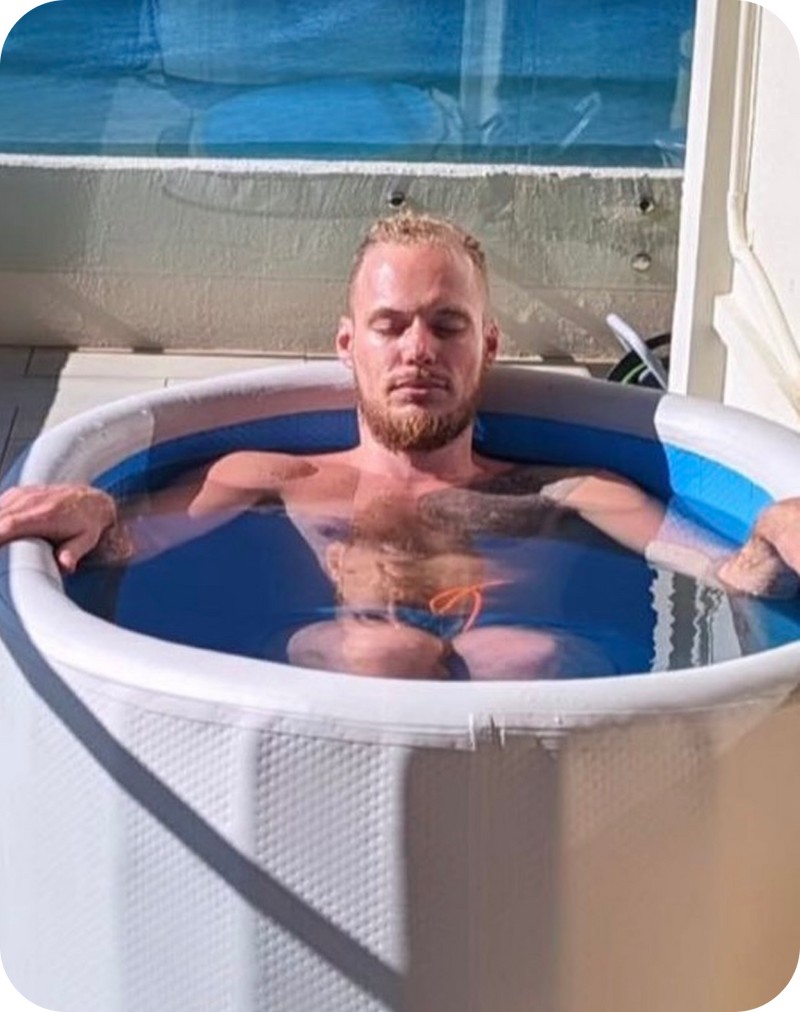

PlusLife ambassadors. Paid partnership.
A short call, free, no deposit taken. Bring the seven things, your postcode and access, your site and base, and the model. You leave with:
And if a decision is still months off, book it anyway. Most people don't wake up one morning and decide to buy a sauna. It takes weeks, sometimes months, of research and discussion with your family. The numbers above are exactly what those weeks need.
Get them, compare us against the shortlist, and come back if we hold up. The call commits you to nothing: no payment, no signature, no reservation.
Nothing to pay and nothing to sign: just the call, and both of you are welcome on it.
Yes: a traditional sauna is hard-wired to a dedicated circuit by a licensed electrician. If a figure is needed the electrician is about $1,500, and we have a network of sauna-trained electricians we can recommend.
Yes. Both are quoted on the free expert consultation from three inputs: your postcode and access, your site and base, and the model.
Our traditional saunas are designed in Australia and 100% built in Europe, where sauna was born. The whole traditional range is 100% built in Europe, including the Arc, Cove and Meridian.
The infrared line is Australian design, available indoor and outdoor.
Yes: showrooms are open by appointment, and the call is where to arrange one. Ask on the call whether there is a host within reach of you.
Where a unit is in stock the product page says so; where it is on order it shows the delivery month. The call confirms the window for your model before you pay.
Ask what the reason for it is, of everyone on your shortlist. A sale price should have a reason you can hear out loud: an end of financial year run, a container landing, a superseded model, a display unit.
If a seller cannot tell you the reason, that is worth noticing.
It is arguably more useful now. Your electrician's quote and your own comparison both need the model's electrical requirement and the spec sheet in writing, and the call commits you to nothing.
Neither has to lose. The two Minis sit little more than a hundred dollars apart, so decide on feel. If the real ask was "ready when we get home", the Wi-Fi controller answers it, with Harvia behind the app.
Not sure which sauna fits best? Speak with our team to get clarity and confidence before you buy.